מָבוֹא
איומים מבוססי קבצים נותרים אחד הסיכונים העיקשים והמתחמקים ביותר עבור ארגונים, החל מניצול פרצות "יום אפס" במסמכים ועד מתקפות APT המוסתרות בקבצים שנראים תמימים. בעוד ארגונים פועלים לאבטחת כל קובץ הנכנס לסביבתם, טכנולוגיית "ניטרול תוכן ובנייה מחדש" (CDR) הפכה לשכבת הגנה חיונית.
בניגוד לכלים המבוססים על זיהוי, טכנולוגיית CDR מסלקת איומים באופן יזום על ידי בניית קבצים מחדש לגרסאות בטוחות ושמישות. מדריך זה משווה בין שמונה ספקי ה-CDR המובילים לשנת 2026, ומסייע למנהלי אבטחה להעריך את היכולות ולבחור בביטחון את הפתרון המתאים.
מהו "פירוק תוכן ובנייה מחדש" (CDR) ומדוע הוא חשוב לארגונים בשנת 2026?
"ניטרול תוכן ובנייה מחדש" (CDR)היא טכנולוגיה פרואקטיבית לניקוי קבצים, המנטרלת איומים פוטנציאליים על ידי הסרת רכיבים זדוניים מהקבצים. במקום לנסות לזהות תוכנות זדוניות, טכנולוגיית CDR מפרקת את הקובץ, מסירה ממנו רכיבים מסוכנים כגון מאקרו או קוד מוטמע, ובונה מחדש גרסה בטוחה ושימושית עבור משתמשי הקצה.
גישה זו מבטיחה שקבצים הנכנסים לארגון באמצעות דואר אלקטרוני, הורדות, העברות קבצים או כלי שיתוף פעולה, יהיו נקיים ממטענים זדוניים נסתרים, ומגנים על הארגון מבלי לשבש את הפרודוקטיביות.
כיצד פועל ה-CDR לנטרול איומים מבוססי קבצים
CDR מפרק קובץ למרכיביו, מאמת את המבנה, מסיר רכיבים פעילים או שאינם תואמים, כגון מאקרו, סקריפטים, אובייקטים הפגיעים לניצול, סימון לא תקין וקישורים חשודים, ולאחר מכן משחזר קובץ בטוח השומר על התוכן ועל השימושיות. ניתן להכניס את הקבצים המקוריים להסגר או לשלוח אותם לסביבת בדיקה לצורך ניתוח פורנזי, בהתאם למדיניות.
היתרונות העיקריים של CDR עבור מערך האבטחה הארגוני
- מגן מפני איומים ידועים ובלתי ידועים, לרבות טכניקות "יום אפס" וטכניקות התחמקות
- מספק קבצים נקיים תוך שניות, עם מינימום מאמץ מצד המשתמש
- מפחית את התלות בחתימות, בהפעלה ובשיקול דעת אנושי
- משפר את העמידה בדרישות הטיפול המאובטח בקבצים והגנה על נתונים
- מיישם מדיניות אחידה בכל ערוצי הדוא"ל, האינטרנט, SaaS ו-OT
כיצד CDR משלים את אמצעי האבטחה הקיימים
CDR אינו מחליף תוכנות אנטי-וירוס, סביבות בידוד, EDR או SEG. הוא משלים אותן. כלי הזיהוי ממשיכים לספק תובנות, קורלציה ותגובה, בעוד ש-CDR מפחית את הסיכון בנקודת הכניסה של הקבצים על ידי שחזור קבצים בטוחים תחילה.
מגמות וחידושים מתהווים בתחום CDR לשנת 2026
- ICAP נרחב יותר API ICAP עבור העלאות, פרוקסי הפוך ו-SASE
- בדיקות נאמנות לקובץ מחמירות יותר לשמירה על שמישות המסמכים בהיקף נרחב
- התאמה הדוקה יותר לתכונות אבטחת נתונים כגון השחרה והסתרה
- כיסוי נרחב יותר לארכיונים ולאובייקטים מקוננים
- השימוש הגובר ב-OT ובהעברת נתונים בין-תחומית
- הגנה מפני תוכנות זדוניות שנוצרו על ידי בינה מלאכותית ומתקפות המונעות על ידי בינה מלאכותית, מה שמגביר את הביקוש לניתוח קבצים מעמיק יותר ולמדיניות ניקוי אדפטיבית
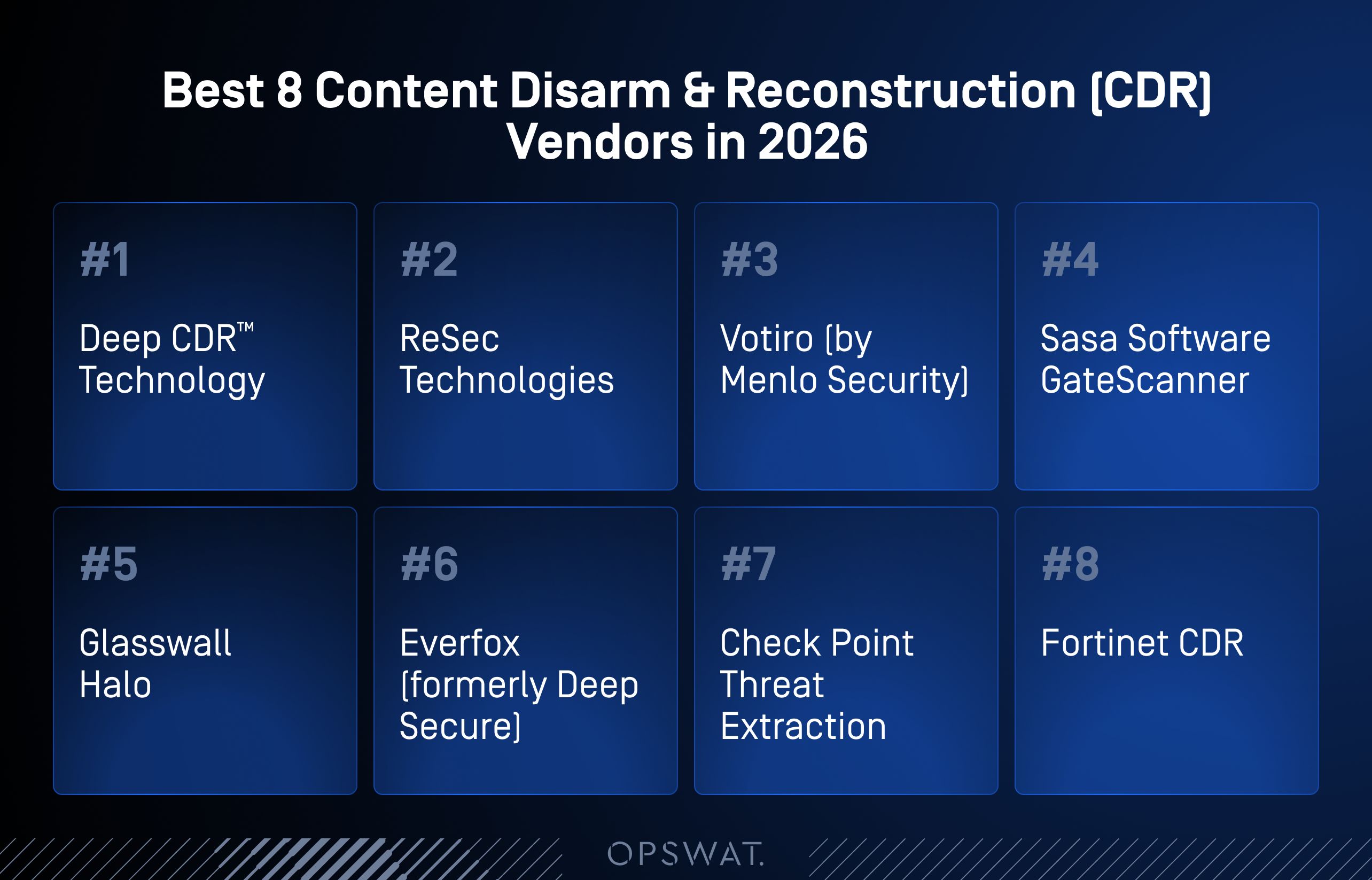
8 הספקים המובילים בתחום פירוק ושיחזור תוכן (CDR) בשנת 2026
בחירת ספק CDR מתאים היא קריטית להגנה על הארגון מפני איומים מבוססי קבצים, פגיעויות "יום אפס" ואיומים מתמשכים ומתקדמים. להלן רשימה שנבחרה בקפידה של עשרת ספקי ה-CDR המובילים ברמה ארגונית לשנת 2025. כל ספק נבחן על פי יכולות הליבה שלו, גמישות הפריסה, תמיכת האינטגרציה ומקרי שימוש בפועל.
#1 טכנולוגיית Deep CDR™ – אמת המידה בתעשייה לניקוי קבצים
טכנולוגייתOPSWAT CDR™ היא מנוע טיהור הקבצים של החברה, המתמקד במניעה, הפועל במסגרת פלטפורמת MetaDefender®; המנוע תוכנן במיוחד עבור תשתיות קריטיות ותהליכי עבודה עם קבצים מהימנים. בבדיקות עצמאיות, טכנולוגיית Deep CDR™ הפכה לפתרון ה-CDR הראשון שהשיג 100% הגנה ו-100% דיוק בזיהוי קבצים לגיטימיים בבדיקות של SE Labs.
סקירת טכנולוגיה
טכנולוגיית Deep CDR™ מאמתת את סוג הקובץ ומבנהו האמיתיים, יוצרת "מקום שמור" בטוח, מנטרלת אובייקטים מסוכנים כגון מאקרו, סקריפטים ומבנים פגומים, ולאחר מכן מייצרת מחדש קובץ נקי שניתן להשתמש בו במלואו. טכנולוגיית Deep CDR™ משולבת גם עםSandbox Metascan™ Multiscanning, Proactive DLP™ Adaptive Sandbox OPSWAT, כדי לאפשר אבטחת קבצים רב-שכבתית.
תכונות עיקריות
איך זה עובד
- לבחון ולאמת את הסוג/העקביות האמיתיים, ולמנוע התחזות
- ליצור ולשמור על מקום שמור
- לפרק ולבנות מחדש אלמנטים מאושרים; לשקם מבנים
- לספק קבצים נקיים ותקינים הכוללים פרטי ביקורת
| יתרונות | חסרונות |
|---|---|
|
|
#2 ReSec Technologies – Firewall חכמה לקבצים
ReSec מתמקדת בהגנה על שערים בשיטת Zero-Trust באמצעות פלטפורמת ReSecure שלה, המשלבת אימות חכם של סוגי קבצים, זיהוי רב-מנועי ו-CDR בזמן אמת, כדי לסכל איומים ידועים ובלתי ידועים המועברים באמצעות קבצים, תוך שמירה על חוויית המשתמש.
סקירת טכנולוגיה
ReSec CDR מזהה סוגי קבצים אמיתיים, כולל תוכן מוטמע או דחוס, ולאחר מכן בונה עותקים תפקודיים מלאים למניעת איומים לא ידועים. הקבצים המקוריים מועברים להסגר מחוץ לארגון לצורך ניתוח פורנזי.
תכונות עיקריות
- הסגר מובנה של קבצי מקור מחוץ לרשת
- ארכיטקטורה ניתנת להרחבה ובעלת זמן השהיה נמוך, המתאימה לשערים בעלי נפח תעבורה גבוה
- כיסוי ערוצים: דוא"ל, אינטרנט, מדיה נשלפת, שרתים API
איך זה עובד
- להגדיר מקור הסגר חיצוני
- זהה את סוג הקובץ האמיתי
- לשחזר העתקים נקיים ולספק אותם ליעדם
| יתרונות | חסרונות |
|---|---|
|
|
#3 Votiro (מבית Menlo Security) – שילוב בין בחירה חיובית לאבטחת דפדפנים
בפברואר 2025 רכשה Menlo Security את Votiro, ובכך שילבה את פתרונות ה-CDR והאבטחת נתונים (DDR) המתקדמים של Votiro בתיק המוצרים של Menlo לאבטחת דפדפנים וסביבות עבודה ארגוניות, המשלב אבטחת קבצים בדפדפן, בדוא"ל, בכלי שיתוף פעולה API .
סקירת טכנולוגיה
טכנולוגיית ה-CDR של Votiro, המבוססת על בחירה חיובית, משחזרת קבצים על ידי מתן גישה רק לרכיבים שידוע כי הם תקינים, ובכך מבטיחה את אמינות המסמכים בכל ערוצי הכניסה והיציאה; הטכנולוגיה משולבת ב-Menlo ומשלימה את גישת ה-Zero Trust.
תכונות עיקריות
- אבטחת סביבת עבודה חלקה: הגנה על זרימת הקבצים בדפדפן, בדוא"ל, ב-SaaS ובאפליקציות לשיתוף פעולה
- בקנה מידה ארגוני עם חווית משתמש שקופה (ללא הפרעה לזרימת העבודה)
איך זה עובד
- יירוט העברת קבצים (דפדפן/דוא"API)
- לפרק ולבחור באופן חיובי את הרכיבים הבטוחים; לבנות מחדש קובץ נקי
- העבר קבצים בטוחים ובפורמט מקורי למשתמשים ולאפליקציות
| יתרונות | חסרונות |
|---|---|
|
|
#4 Sasa Software – מומחה לתשתיות קריטיות
GateScanner של Sasa מגן על "כל הערוצים" (דוא"ל, הורדות מהאינטרנט, העברת קבצים מאובטחת ( MFT), מדיה נשלפת,API) באמצעות CDR, שנועד במקור לרשתות קריטיות הנתונות לאיומים חמורים, ונמצא בשימוש נרחב במגזר הממשלתי ובמערכות ICS/OT.
סקירת טכנולוגיה
GateScanner מפרק קבצים (כולל קבצי ארכיון) לרכיבים הבסיסיים שלהם, מסיר מהם תוכן פעיל או מסוכן, ומרכיב מחדש גרסאות העומדות בדרישות המדיניות. כמו כן, הוא מציע העברה בין-דומיינים באמצעות GateScanner Injector (דיודה אופטית להעברת נתונים) כדי להעביר נתונים שעברו טיהור בין רשתות מופרדות.
תכונות עיקריות
- אבטחת דואר אלקטרוני מובנית (SEG או ממסר SMTP), ניקוי קבצים להורדה בדפדפן, עמדות מדיה נשלפת ומערכת העברת קבצים מאובטחת ( MFT)
- רמת פירוט פעילה-פעילה של קנה מידה ומדיניות; תומך במאות סוגי קבצים
- שילוב עם מערכות האקוסיסטם של מיקרוסופט (למשל, רישום ב-AppSource)
איך זה עובד
- לנטרל ולשחזר כדי לחסל איומים מסוג "יום אפס" ו"פולימורפיים".
- העברת תוכן שעבר חיטוי בערוץ הנבחר (דוא"USB)
| יתרונות | חסרונות |
|---|---|
|
|
#5 Glasswall Halo – הגנה על קבצים ברמה צבאית
Glasswall מספקת הגנה על קבצים במודל "אמון אפס" באמצעות פלטפורמת ה-CDR שלה (Halo), הנמצאת בשימוש נרחב במגזרי הביטחון, המודיעין ותחומים הנתונים לרגולציה מחמירה; שילובים אחרונים (למשל, עם ReversingLabs) מוסיפים הקשר של מודיעין איומים לפעילות ה-CDR.
סקירת טכנולוגיה
Glasswall בודקת את תקינות הקבצים בהתאם למפרט המאושר של היצרן, מתקנת חריגות, מסירה רכיבים מסוכנים בהתאם למדיניות (כגון פקודות מאקרו וקישורים) ויוצרת מחדש קבצים נקיים התואמים להנחיות ה-ISG של ה-NSA בנוגע לבדיקה ולטיהור.
תכונות עיקריות
- מדרגיות מבוססת Kubernetes,ICAP וחווית משתמש (UX) למחשבים שולחניים ולסביבות "חדר נקי"
- פריסות ברמה צבאית ותיעוד טכני לצורך מיפוי מדיניות
איך זה עובד
- בדיקה: פירוק ואימות מבנה הקובץ.
- בנייה מחדש: תיקון/שיקום מבנים פגומים.
- ניקוי: הסרת רכיבים בעלי סיכון גבוה בהתאם למדיניות.
- תוצאה: בדיקות סמנטיות ופלט של קובץ נקי במהירות.
| יתרונות | חסרונות |
|---|---|
|
|
#6 Everfox (לשעבר Deep Secure) – הסרת איומים בשיטת Zero Trust
Everfox (המותג החדש של היחידה הפדרלית של Forcepoint) משלבת את המורשת של Deep Secure , שנרכשה על ידי Forcepoint בשנת 2021. Everfox מקדמת את Zero Trust CDR (הידוע גם כ-Threat Removal) בכל תיקי המוצרים הבין-תחומיים וההגנה מפני איומים, ובנוסף משלבת את RBI של hardsec בשירותי ענן חדשים.
סקירת טכנולוגיה
Everfox CDR מחלץ מידע עסקי תקין, מאמת את המבנה ויוצר קובץ חדש לחלוטין כדי להעביר את המידע הלאה, וכך מונע אפילו מתוכנות זדוניות ופרצות אבטחה לא מוכרות לשרוד את התהליך.
תכונות עיקריות
- תפוקה מדויקת עד לרמת הפיקסל, הניתנת לעריכה מלאה; מניעה דטרמיניסטית
- פריסות בין-תחומיות ופריסות ברמת אמינות גבוהה עבור משימות ממשלתיות/קריטיות
איך זה עובד
- לחלץ נתונים עסקיים מהקובץ המקורי
- ודא שהמידע שחולץ תקין
- ליצור קובץ חדש בהתאם למפרט, למחוק או לשמור את הקובץ המקורי
- לספק תוצאה בטוחה וניתנת לעריכה
| יתרונות | חסרונות |
|---|---|
|
|
#7 Check Point Threat Extraction – ניקוי קבצים מיידי
Threat Extraction (TE) של Check Point היא יכולת CDR המשתרעת על שערי הרשת של Quantum ועל נקודות הקצה והדוא"ל של Harmony, הפועלת לצד סביבת הבדיקה (sandboxing) של Threat Emulation ומופעלת על ידי מודיעין ה-AI של ThreatCloud.
סקירת טכנולוגיה
הפקת איומים מסירה באופן מונע תוכן פעיל (מאקרו, אובייקטים משובצים, סקריפטים, קישורים), ממירה את הקובץ לפורמט PDF (לפי בחירה) ומספקת קבצים נקיים תוך שניות, בעוד שהקובץ המקורי יכול להשתחרר לאחר קבלת תוצאות הבדיקה בסביבת הבדיקה, כאשר הדבר מותר.
איך זה עובד
- הסרת רכיבים הניתנים לניצול בעת הכניסה
- שחזור גרסה בטוחה (לרוב כמעט מיידי)
- אפשרות לשחרר את הגרסה המקורית לאחר אישור הסנדבוקס (בהתבסס על מדיניות)
איך זה עובד
- הסרת רכיבים הניתנים לניצול בעת הכניסה
- שחזור גרסה בטוחה (לרוב כמעט מיידי)
- אפשרות לשחרר את הגרסה המקורית לאחר אישור הסנדבוקס (בהתבסס על מדיניות)
| יתרונות | חסרונות |
|---|---|
|
|
#8 Fortinet CDR – מובנה ב-FortiMail וב-FortiGate
Threat Extraction (TE) של Check Point היא יכולת CDR המשתרעת על שערי הרשת של Quantum ועל נקודות הקצה והדוא"ל של Harmony, הפועלת לצד סביבת הבדיקה (sandboxing) של Threat Emulation ומופעלת על ידי מודיעין ה-AI של ThreatCloud.
סקירת טכנולוגיה
Fortinet CDR מסיר תוכן פעיל בזמן אמת, מתייחס לכל הרכיבים הפעילים כאל חשודים, ולאחר מכן משחזר קבצים שעברו ניקוי (עותקים "שטוחים"). מנהלי המערכת יכולים לשמור את הקבצים המקוריים באופן מקומי, להכניס אותם להסגר או להעביר אותם ל-FortiSandbox לצורך ניתוח.
איך זה עובד
- יירט קבצים (דוא"ל/אינטרנט/HTTP(S)/FTP).
- פירוק וניקוי: הסרת מאקרו, סקריפטים, קישורים/אובייקטים משובצים
- לשחזר ולספק קובץ נקי; לשמור את הקבצים המקוריים או להציבם בסביבת בדיקה בהתאם למדיניות
איך זה עובד
- יירט קבצים (דוא"ל/אינטרנט/HTTP(S)/FTP).
- פירוק וניקוי: הסרת מאקרו, סקריפטים, קישורים/אובייקטים משובצים
- לשחזר ולספק קובץ נקי; לשמור את הקבצים המקוריים או להציבם בסביבת בדיקה בהתאם למדיניות
| יתרונות | חסרונות |
|---|---|
|
|
השוואת ספקי CDR: תכונות, יכולת הרחבה ותמיכה
טבלת השוואה: תכונות עיקריות ותמיכה בסוגי קבצים
| ספק | תכונות ייחודיות | כיסוי סוגי קבצים | מהירות עיבוד | אפשרויות פריסה |
|---|---|---|---|---|
| טכנולוגיית OPSWAT CDR™ | אימות וניקוי מעמיקים, יצירת קבצים מחדש עם תוכן שמיש במלואו, המרה הניתנת להתאמה אישית, דוחות ניקוי פורנזיים, דירוג 100% מ-SE Labs | מעל 200 סוגי קבצים, ארכיונים רקורסיביים, זיהוי סוגי קבצים באמצעות בינה מלאכותית | מילי-שניות לכל קובץ | דוא"ל, אינטרנט, ICAP, מדיה ניידת, Cloud |
| ReSec Technologies | הפרדת קבצים מקוריים מחוץ לרשת, אימות חכם של סוגי קבצים, אכיפת מודל "אמון אפס" | הזיהוי תומך ביותר מ-250 סוגים; CDR מנקה יותר מ-50 סוגים | רוב הקבצים מעובדים תוך שניות, ארכיטקטורה מדרגית הפועלת בזמן אמת | דוא"ל, אינטרנט, מדיה נשלפת, API, מדיה ניידת, שרתים, API |
| Votiro (Menlo Security) | גישת בחירה חיובית, בשילוב עם דפדפן מאובטח ואבטחת SaaS | מעל 200 סוגי קבצים, שומר על פקודות מאקרו וקבצים המוגנים בסיסמה | "מילי-שניות" לניקוי נתונים, המיועד לזרימות בזמן אמת | דפדפן, דואר אלקטרוני, SaaS, אפליקציות לשיתוף פעולה, API |
| Sasa Software | פירוק מעמיק, דיודה אופטית להעברת נתונים בין-תחומית, בקרה מדויקת על מדיניות | מאות סוגי קבצים (Office, PDF, קבצי מדיה, קבצי ארכיון, PST/OST, DICOM) | משלוח כמעט בזמן אמת; שיעור הצלחה מוכח של 98.99% בבדיקות | דוא"ל, אינטרנט, העברת MFTצים מאובטחת MFT, מדיה נשלפת,API |
| Glasswall Halo | אימות מול מפרטי היצרן, התאמה ל-NSA ISG, בדיקות סמנטיות | יותר מ-85 סוגי קבצים (Office, PDF, תמונות, אודיו/וידאו, קבצי הפעלה, קבצי ארכיון) | עיבוד הנמשך פחות משנייה | אשכולות Kubernetes,ICAP, חדר נקי למחשבים שולחניים |
| Everfox (Deep Secure) | חילוץ נתוני עסקיים, מניעה דטרמיניסטית, פלט מדויק עד לרמת הפיקסל | Office, PDF, נתונים מובנים | שחזור כמעט בזמן אמת | סביבות חוצות-תחומים בעלות רמת אבטחה גבוהה |
| Check Point Threat Extraction | חיטוי מיידי, המרה ל-PDF (אופציונלי), משולב עם הדמיית איומים | יותר מ-40 סוגי קבצים (Office, PDF, תמונות, Ichitaro, Hanword) | חיטוי מיידי | שערי רשת, נקודות קצה, דואר אלקטרוני |
| Fortinet CDR | משולב ב-FortiMail/FortiGate, בדיקה מבוססת פרוקסי, שילוב סביבת בדיקה | Office, PDF, קבצי ZIP; מסיר תוכן פעיל | חיטוי בזמן אמת | דוא"ל, רשת, ICAP, סביבת בדיקה |
מדרגיות ומוכנות לארגונים
- יש לוודא שהמעבד מסוגל להתמודד עם עיבוד בנפח גדול תוך שמירה על זמני עיבוד חציוניים קצרים
- יש לוודא תמיכה בארכיונים מקוננים, בקבצים גדולים ובהעברות בכמויות גדולות
- סקירת קיבוץ, מצבים פעילים וניהול גרסאות של מדיניות לצורך בקרת שינויים
- בקשו נתוני ביצועים אמיתיים המתאימים לערוצים שלכם
שילוב עם מערכות אבטחה קיימות
- ICAP API פרוקסי הפוך ותהליכי העלאה
- שילוב מערך הדוא"ל עם SEG או API דואר ענן
- Sandbox עבור קבצים מקוריים ופעולות אוטומטיות בעקבות תוצאות הבדיקה
- מחברים מסוג SIEM ו-SOAR להתראות ולזרימת עבודה
תמיכה בספקים, הסכמי רמת שירות (SLA) ושביעות רצון הלקוחות
- תמיכה 24/7 עם הסכמי רמת שירות (SLA) מתועדים
- אנשי קשר טכניים שנקבעו לצורך הפריסה
- תוכנית פעולה ברורה לשדרוגים ולהרחבת סוגי הקבצים
- לקוחות מובילים בענף או באזור שלך
כיצד להעריך ולבחור את ספק ה-CDR המתאים לארגונכם
1. בדיקות ואימות עצמאיים
- האם הפתרון נבדק על ידי מעבדות עצמאיות או גופים ממשלתיים?
- האם הספק יכול לספק תוצאות של בדיקות חדירה ודוגמאות לביצועים ביום האפס?
2. שילוב והתאמה לתהליכי העבודה
- האם הפתרון משתלב בקלות API שלכם בדוא"ל, באינטרנט, ICAP API ?
- האם קיימת API ברור API ה-REST API ותמיכה באוטומציה?
3. כיסוי סוגי קבצים ותוכנית פעולה
- כמה סוגי קבצים ופורמטי ארכיונים נתמכים כיום?
- באיזו מהירות יכול הספק להוסיף סוגי קבצים חדשים, כולל פורמטים אזוריים כמו HWP או JTD?
4. ביצועים ומדרגיות
- מהו זמן הטיפול הממוצע לכל סוג קובץ?
- האם הפתרון מסוגל לטפל בקבצים גדולים, בארכיונים מקוננים ובתעבורה בהיקף נרחב ללא עיכובים?
5. גמישות במדיניות
- האם ניתן להחיל מדיניות שונה על ערוצים פנימיים לעומת ערוצים חיצוניים?
- האם ניתן לכוונן את תהליך הניקוי (למשל, לאפשר מאקרוים באופן פנימי אך להסיר אותם באופן חיצוני)?
6. נהלי אבטחה ופיתוח
- האם הספק פועל על פי תהליכי SDLC ובדיקת קוד מאובטחים?
- האם הספריות של צד שלישי מורשות כראוי ומתוחזקות כראוי?
7. יכולת ביקורת ותאימות
- האם הפתרון יוצר יומנים מפורטים ותיעודי ביקורת?
- האם הוא יכול לאמת את תקינות הארכיון ולספק דוחות תאימות?
8. שמירה על השימושיות
- האם הקובץ המשוחזר שומר על פונקציות חיוניות כמו אנימציות ב-PowerPoint או נוסחאות ב-Excel?
- יש לבצע בדיקה באמצעות דוגמאות מהעולם האמיתי כדי לאמת את השימושיות.
9. קיימות ותמיכה מצד הספקים
- כמה מהנדסים עוסקים בתחזוקה שוטפת של מנוע ה-CDR?
- מהו קצב השחרור ותוכנית העבודה לשיפורים?
CDR בפעולה: מקרי שימוש ארגוניים וסיפורי הצלחה
Fortinet מספקת את ה-CDR כשירות אבטחה של FortiGuard ומיישמת את ה-CDR בפרופילי האנטי-וירוס של FortiMail ו-FortiGate (בדיקה מבוססת פרוקסי). ה-CDR הוא חלק מאסטרטגיית ה-Zero-Trust הרחבה יותר של Fortinet, המשלימה את שכבות ה-NGFW, הדוא"ל והסנדבוקס.
קיימות ותמיכה מצד הספקים
הגנו על קבצים מצורפים לדוא"ל נכנס ועל מסמכים המועברים בפלטפורמות לשיתוף פעולה. שמרו על הפריון תוך נטרול הסיכונים הטמונים בכך.
הורדות והעלאות מהאינטרנט
לבדוק ולנקות קבצים שהורדו מהאינטרנט, וכן לאמת קבצים שהועלו לפורטלים וליישומים, לרבות תהליכי עבודה הפונים ללקוחות.
העברת Secure ותקשורת בין-דומיינים
העברת קבצים בין רשתות ודרגות מופרדות תוך אכיפת מדיניות וניתנות לביקורת, כולל שילוב של דיודות נתונים אופטיות.
רפואה שיקומית ותשתיות חיוניות
יש לפקח על מדיה נשלפת ועל זרימת קבצים של קבלנים לתוך סביבות המפעל או השטח, ולהבטיח שרק קבצים בטוחים יעברו את גבולות האמון.
שאלות נפוצות
האם קיימים כלים חינמיים או בקוד פתוח לפירוק ולבנייה מחדש של תוכן?
ישנם אמנם כמה כלים קהילתיים, אך דרישות הארגון מצריכות לרוב כלים מסחריים מבחינת היקף, ביצועים, אינטגרציה ותמיכה.
במה שונה CDR מטכנולוגיות אנטי-וירוס או סנדבוקסינג מסורתיות?
כלי אנטי-וירוס וכלי סנדבוקס מזהים ומחליטים. CDR בונה מחדש את הקבצים לגרסאות בטוחות, כך שהאיומים מנוטרלים עוד לפני העברתם. מרבית התוכנות משתמשות בשני הכלים.
אילו סוגי קבצים ופורמטים נתמכים בדרך כלל על ידי פתרונות CDR ארגוניים?
יש תמיכה נרחבת בקבצי Office, PDF, תמונות, מדיה, HTML ופורמטים נפוצים של קבצי ארכיון. מנועים מתקדמים תומכים גם בארכיונים מקוננים ובפורמטים מיוחדים.
הצג עוד סוגי קבצים נתמכים
האם ניתן לשלב פתרונות CDR עם פלטפורמות אחסון בענן ופלטפורמות לשיתוף פעולה?
כן. חפשו ממשקי API ומחברים מובנים, וכן אפשרויות ICAP proxy הפוך לניתוב גמיש.
מהן המגבלות או החסרונות האפשריים של טכנולוגיית CDR?
מדיניות מחמירה מדי עלולה לפגוע בנוחות השימוש. ניתן להתמודד עם בעיה זו באמצעות תכנון מדיניות, רשימות מאושרות וחריגים בתהליכי העבודה.
באיזו מהירות יכולים כלי CDR לעבד כמויות גדולות של קבצים?
מנועים מודרניים מספקים קבצים נקיים תוך שניות, גם בהיקפים גדולים. יש לבדוק תמיד את התפוקה ביחס לנפחים ולערוצים בפועל.
האם נדרשת הכשרת משתמשים כדי לפרוס ולהפעיל פתרונות CDR ביעילות?
מינימלי, שכן CDR הוא שקוף עבור מרבית המשתמשים. יש להדריך את המנהלים בנוגע למדיניות, לחריגים ולדיווח.
כיצד מתמודדים ספקי CDR עם עדכונים לסוגי קבצים חדשים או איומים מתהווים?
באמצעות עדכוני מנוע קבועים, מודולים לסוגי קבצים חדשים וחבילות מדיניות. בקשו לקבל את תוכנית הפיתוח ואת תדירות השחרור.
מהן הטעויות הנפוצות שארגונים עושים בעת יישום CDR?
הערכת חסר של נפח ועומק הרקורסיה, שימוש במדיניות ברירת מחדל ללא התאמה, דילוג על פיילוטים עבור תהליכי עבודה מרכזיים, והזנחת הדיווח ו-RBAC.